Vertical SaaS: Why Niche Products Are Outperforming Universal Ones Again
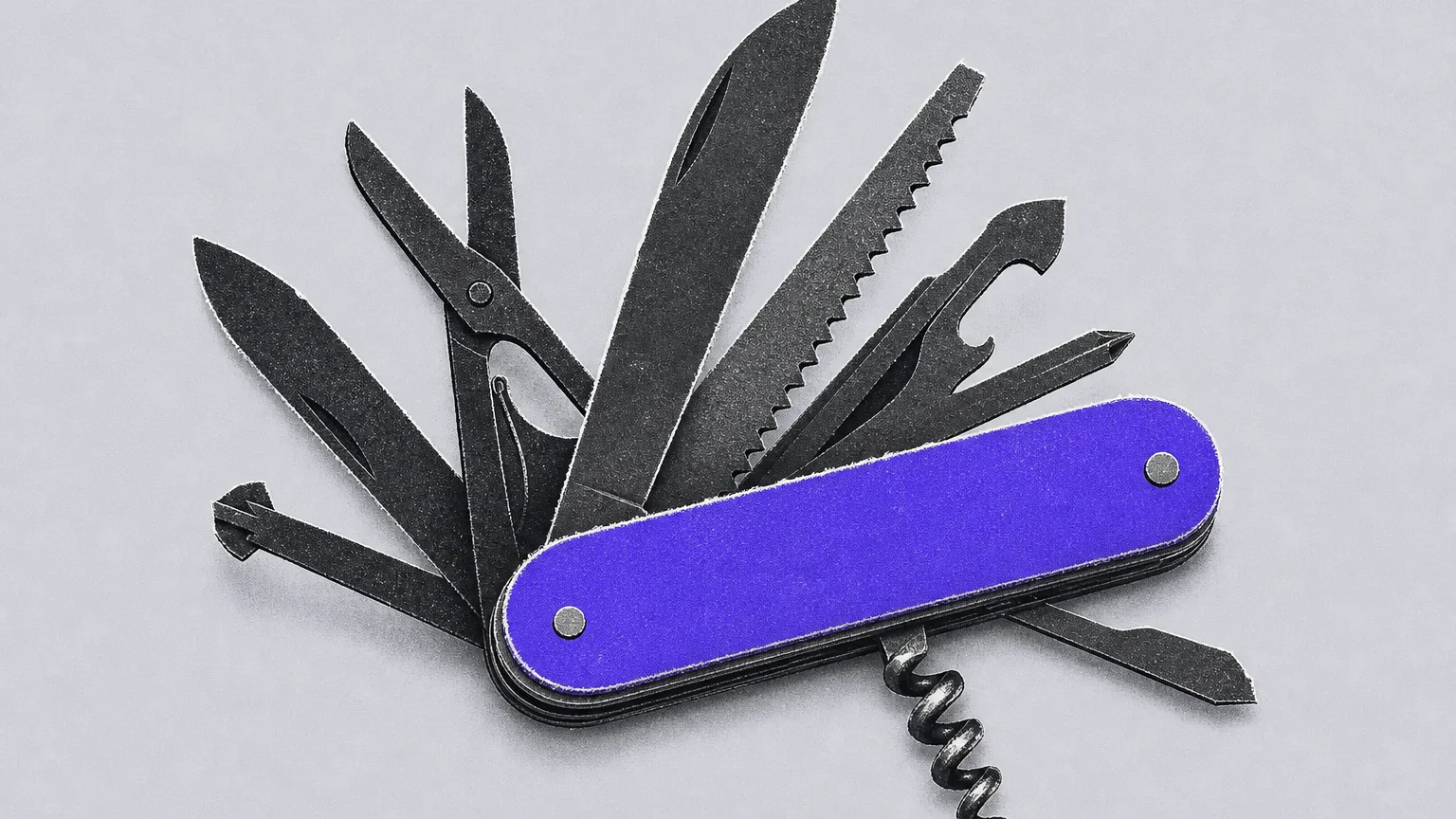
For the last decade, the software market has trended toward universality. Almost every new product promised to be an "all-in-one platform" for tasks, sales, finance, analytics, communications, automation, and team management.
The logic is clear. A universal product appears larger. It can be sold to various industries and seems more scalable. A founder looks at the market and thinks: if my service is suitable for everyone, the market must be huge.
The problem is that "for everyone" almost always means "not quite right for anyone."
This is especially true in 2026, when basic features have become easy to replicate. Spreadsheets, boards, chats, reports, text generation, document search, and AI assistants—all of these are rapidly becoming commodities. If a product is distinguished only by its interface and a set of generic features, it becomes increasingly difficult to defend.
This is precisely why there is renewed interest in vertical SaaS—industry-specific software designed not for "business in general," but for a specific sector: clinics, restaurants, law firms, construction companies, real estate agencies, auto repair shops, online schools, dental practices, logistics, beauty salons, and accounting firms.
What is Vertical SaaS?
Horizontal SaaS solves a general task for various companies. Examples include CRM, task trackers, email marketing services, calendars, and analytics platforms.
Vertical SaaS solves a task for a specific industry. It understands the industry’s language, processes, documents, roles, constraints, integrations, and habits.
The difference is not in the size of the market, but in the depth of the fit.
A universal CRM says: "Manage clients and deals."
A vertical CRM for a dental practice says: "Manage patients, appointments, treatment plans, reminders, payments, follow-up visits, medical documentation, and chair utilization."
A universal task management system says: "Manage projects."
A vertical system for a construction company says: "Manage sites, budgets, contractors, work orders, procurement, schedules, approvals, and photo documentation from the site."
The latter no longer looks like "just another piece of software." It looks like the operating environment for a specific business.
Why a Niche Product is Often Stronger Than a Broad One
The main advantage of vertical SaaS is that it sells an understanding of the industry, not just a function.
A buyer in a specific niche does not want to explain to a developer what a doctor's shift, a cash flow gap at a construction site, a marketplace return, claims processing, booking seasonality, or a certificate of completion is. They want to open the product and see that their reality is already understood.
This creates three powerful effects.
First, it is easier to sell. A niche product speaks the client's language. The landing page, demonstrations, case studies, emails, and advertising all become more concrete. It is not "we automate processes"; it is "we reduce the time required to prepare work orders for construction contractors." It is not "we improve analytics"; it is "we show clinic owners which doctors drive repeat visits and which are losing patients."
Second, retention is higher. If a product is embedded in industry-specific processes, it is harder to replace. Menlo Ventures, in their analysis of vertical AI, notes that the defensibility of vertical software is built on its status as a system of record, industry-specific data models, integrations, embedded workflows, and compliance logic (Menlo Ventures, 2026). It is not just a "feature." It is part of the business's operating system.
Third, there are more opportunities for expansion. When a product becomes the center of an industry process, one can add payments, lending, payroll, insurance, document management, analytics, and AI automation around it. Stripe and Tidemark’s report on over 200 vertical SaaS companies shows that multi-product platforms have a total addressable market 10 times larger and grow 21% faster; fintech became the #1 expansion area for 45% of companies launching a second product (Stripe / Tidemark, 2025).
Why AI Strengthens Vertical SaaS
Previously, vertical SaaS primarily stored data and helped manage processes. It was a system of record: applications, clients, documents, payments, statuses, and tasks.
AI is changing the role of such products.
While software previously helped humans work, it can now take on some of the work itself: classifying inquiries, preparing documents, verifying data, suggesting actions, finding errors, filling out forms, responding to clients, preparing reports, and forecasting risks.
However, AI is particularly strong where there is context.
A universal AI assistant knows a little bit about everything. Vertical AI inside industry-specific SaaS knows exactly what is happening in that specific business: what roles, documents, stages, exceptions, constraints, regulations, common errors, and data points exist.
Andreessen Horowitz describes this as the third wave of vertical SaaS: first, the cloud moved industry processes online; then, fintech increased revenue through payments and financial services; and now, AI is turning labor into software (a16z, 2024). In another article, a16z writes that AI can open markets that previously seemed too small for a large SaaS company because it increases revenue per customer and reduces the cost of acquisition (a16z, 2024).
This is an important shift.
Previously, a niche might have been too narrow: too few companies, low checks, and expensive sales. Now, if the product not only stores data but also replaces part of the manual labor, the economics can be completely different.
Why Universal AI Products Will Squeeze Each Other Out
There are many horizontal products currently on the AI market: assistants for emails, notes, meetings, documents, sales, analytics, support, and hiring. Most of them look identical.
Bessemer, in their "State of AI 2025" report, explicitly warns that early growth of AI products can be deceptive if switching between products is too easy and competitive density is high. The report states that promising areas are attracting 2–3 times more competitors than before, and products that are close to the base capabilities of foundational models risk becoming "thin wrappers" (Bessemer, 2025).
This is exactly the problem with horizontal AI services.
If your product is an "AI assistant for text editing," tomorrow it will be overtaken by a model, a browser, an office suite, a CRM, or a dozen startups. If your product is an "AI assistant for preparing insurance claims, considering specific documents, statuses, roles, and regulations," it is much harder to copy. Not because the model is unavailable, but because the context is more complex.
In 2026, the advantage lies less in the AI itself and more in where it is embedded.
Where Vertical SaaS Is Especially Strong
Vertical SaaS works best where several signs are present:
First: The industry operates on complex processes. If work consists of statuses, documents, approvals, exceptions, and repetitive operations, there is a place for an industry-specific product.
Second: There is money involved in the process. Good niches are tied to revenue, payments, utilization, penalties, risks, document turnover, or labor savings. If an error is costly, the product is easier to sell.
Third: Universal tools are a poor fit. When companies are forced to run their processes in spreadsheets, instant messengers, and a collection of "kludges," that is a signal. It is not always sufficient on its own, but it is a strong one.
Fourth: There is repeatability between companies. Vertical SaaS should not be a custom development for each client. A niche is good if different companies have similar processes, but existing solutions are too generic or outdated.
Fifth: There is an accessible sales channel. An industry niche is good not only because it has pain points. It is vital to know whether you can reach the audience: professional communities, conferences, industry media, partners, integrators, opinion leaders, and associations.
The Mistake: Considering Vertical SaaS "Small"
Many founders avoid narrow niches because they seem small.
"A service only for dental practices? I'd rather make a CRM for everyone."
This is understandable, but often erroneous logic.
A broad market on paper is not equivalent to an addressable market. If you build a CRM "for everyone," you are competing with giants that have more money, data, integrations, and trust. If you build a product for a specific industry, your real market may be smaller, but your probability of addressing a specific pain point is higher.
a16z writes that there are over 5,000 vertical SaaS companies in the United States covering industries from freight transportation to real estate, and a significant portion of the more than 600 industries classified by NAICS are still underserved by modern industry-specific software (a16z, 2024).
Therefore, the question is not whether it is "narrow or broad." The question is whether there is enough pain, money, and repeatability in the niche.
A narrow niche can be bad. But a broad idea without a specific buyer is almost always worse.
What This Means for the Entrepreneur
If you are thinking about what product to build in 2026, it is useful to start not with the technology, but with the industry.
Do not ask "I will make an AI agent for business," but rather:
- For whom specifically?
- What process will it take over?
- Who is currently doing this manually?
- How much does it cost?
- How often is it repeated?
- Who makes the purchasing decision?
- Why do universal tools not cover the task?
- What data and integrations are required?
- What will become harder to copy in a year?
Vertical SaaS requires more immersion. You need to talk to the industry, understand its terms, see real operations, and sort through exceptions. However, this immersion becomes your defense.
A superficial product is easy to replace. A product embedded in industry-specific work is much harder to replace.
Summary
In 2026, the winner will not be the one who added AI to their interface. That is already a base expectation.
The winner will be the one who understands a specific industry deeper than others and turns that understanding into a product: processes, documents, data, payments, automation, analytics, and AI that works not in a vacuum, but within a real operating environment.
Horizontal products are convenient when the task is general. But where business lives in complex industry processes, universality often loses to precision.
Vertical SaaS is becoming a strong strategy again, not because "niches are trendy," but because the market is tired of identical tools for everyone.
Businesses need software that understands how they work.