Why 90% of Solo-SaaS Projects Will Fail, and It’s Not Because of the Code
Everyone is rushing to build AI products these days.
Every second person is creating a financial tracker. Every third, a new task management system. Every fourth is building an AI tool that supposedly automates something, yet it remains unclear who actually needs it, what pain point it resolves, or why anyone would pay for it.
The problem is not the code.
Code has actually become cheaper. In a Microsoft Research and GitHub study, developers with access to Copilot completed tasks 55.8% faster than the control group without an AI assistant (Microsoft Research, 2023). In its 2025 survey, Stack Overflow reports that 84% of respondents already use or plan to use AI tools in development, with 51% of professional developers using them daily (Stack Overflow Developer Survey, 2025).
In short, the technical barrier has indeed lowered. But precisely because of this, another barrier has risen: the entrepreneurial one.
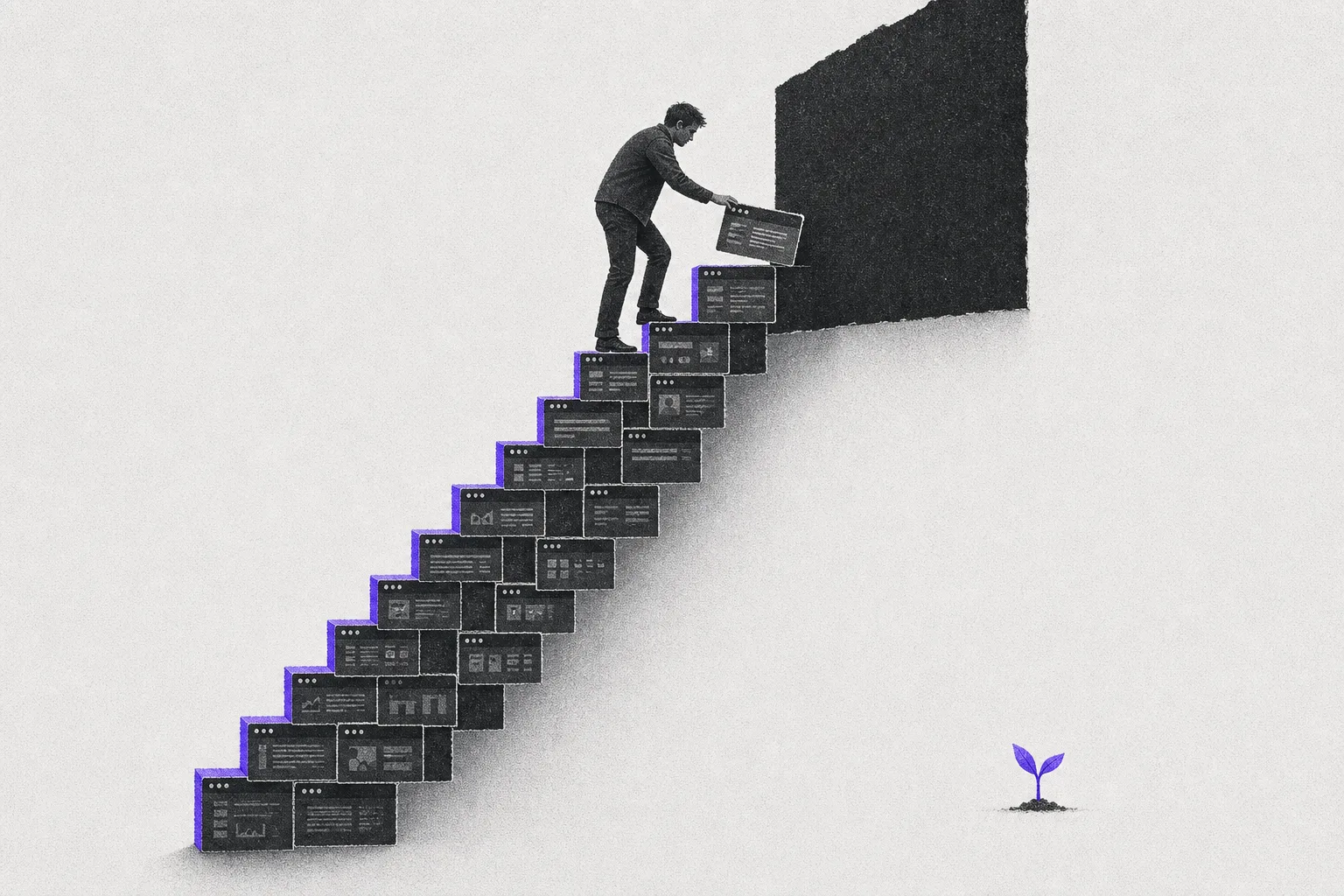
Previously, a massive technical wall stood between an idea and a product: programming languages, frameworks, databases, architecture, and deployment. Many never even started. Now, that wall has been partially dismantled. A single person can build a prototype in an evening, a minimum viable product (MVP) in a week, and a service with payment processing, a user dashboard, and basic automation in a month.
But the market does not pay because you managed to build an app.
The market pays to get rid of a specific, tedious, and irritating problem.
AI has accelerated development, but it hasn't abolished the market
The main trap of Solo-SaaS today is that the speed of product creation creates the illusion of validating an idea.
People build apps because they can now do so—not because they identified a pain point. Not because they talked to ten potential clients. Not because they observed a repetitive manual process that people are already paying for with their time, money, or nerves. They build simply because they had the thought: "What if I made an app?"
That is a poor starting point.
In startup research, this problem has repeated for years. A recent analysis by CB Insights of 431 failed venture-backed companies since 2023 shows that while lack of capital is often the final cause of death, the deeper reason is poor product-market fit, which was present in 43% of the cases studied (CB Insights, 2026). Forbes Advisor, citing Bureau of Labor Statistics (BLS) and CB Insights data, separately notes that about 35% of business failures are linked to a lack of market need, while 19% are due to a flawed business model (Forbes Advisor, 2024).
Important: There is no exact, reliable statistic specifically for Solo-SaaS. No one maintains a global registry of all micro-services that one person launched, posted on Product Hunt, received three likes for, and stopped paying for the domain two months later. Therefore, the "90%" here is not an academic figure, but an honest description of reality: most of these products don't die with a bang. They just never become a business.
Why "knowing how to code" is no longer enough
If you are building a SaaS project alone, you are not just a developer.
You are simultaneously an entrepreneur, marketer, product manager, salesperson, designer, customer support representative, and the person who has to figure out why the user didn't click the pay button.
And this is where most people break.
They know how to write code, but they don't know how to choose a market. They know how to integrate payments, but not how to explain value. They know how to build a dashboard, but not how to bring people to it. They know how to add AI, but not how to answer the simple question: "Why should a client pay for this every month?"
In a paper on the failures of early software startups, researchers noted a similar pattern: strategies often talk about the need to first understand the problem and the solution, but in practice, teams often jump straight into development and product launch, skipping the market learning phase (Giardino et al., 2017).
Solo-SaaS makes this error even more likely. When a team is small, especially when one person is working alone, there is no internal resistance. No one asks inconvenient questions. No one says: "Wait, who actually needs this?" No one demands proof of demand before development.
AI only reinforces this imbalance. It makes building feel satisfying. Rapid progress in the interface looks like business progress. But they are different things.
A product can get prettier every day while the business itself doesn't move at all.
The most dangerous idea is the one that is fun to build
Many Solo-SaaS projects start with a personal annoyance: "I find it inconvenient to manage tasks," "I need a financial tracker," "I want to plan my day better," "I want an AI assistant for notes."
This isn't always bad. Products are often born from one's own pain. But there is a problem: your pain is not yet a market.
A market only exists when there is a group of people for whom this problem:
- repeats regularly;
- costs them money, time, or status;
- is already being solved in some poor, inefficient way;
- is important enough to pay for a solution;
- has a clear channel through which these people can be found.
If these are absent, you don't have a business; you have a personal tool with a public landing page.
This is exactly why so many AI products look the same. They do not solve a market pain; they satisfy the founder’s desire to do something technologically pleasant: another scheduler, another PDF summarizer, another post generator, another "productivity" assistant.
The problem is not that such products cannot be sold. The problem is that they often lack a compelling reason for purchase.
A user might say, "Cool." They might register. They might even play with it for an evening. But that is not the same as taking out a credit card and paying every month.
Solo-SaaS faces three real risks
The first risk is weak pain.
If a product saves a user five minutes once a month, they won't pay. If it removes manual work that prevents them from closing deals, counting money, responding to clients, or avoiding fines, the situation is different. Money exists where the problem already has a price tag.
The second risk is the absence of a sales channel.
Many think: "I'll build the product first, then figure out the promotion." For Solo-SaaS, this is almost always a mistake. The channel must be part of the idea. If you don't understand where your clients live, what words they use, whom they trust, and how they make decisions, you are building a product in the dark.
The third risk is an audience that is too broad.
"For entrepreneurs," "for freelancers," "for everyone who wants to be more productive"—this is not a segment. This is fog. A good first segment sounds duller and more concrete: "small agencies of 5–20 people that lose incoming inquiries from Telegram," "online schools that need to quickly reconcile payments and access rights," "lawyers who manually prepare standard documents using templates."
The more concrete the segment, the easier it is to understand the pain, write landing page copy, find the first users, and sell.
Where external experience helps
The main difficulty of Solo-SaaS is that the founder is left one-on-one with their hypotheses too soon. AI helps write code, but it doesn't tell you whether you should even build this product, who to sell it to, how to formulate value, and why the user should pay every month.
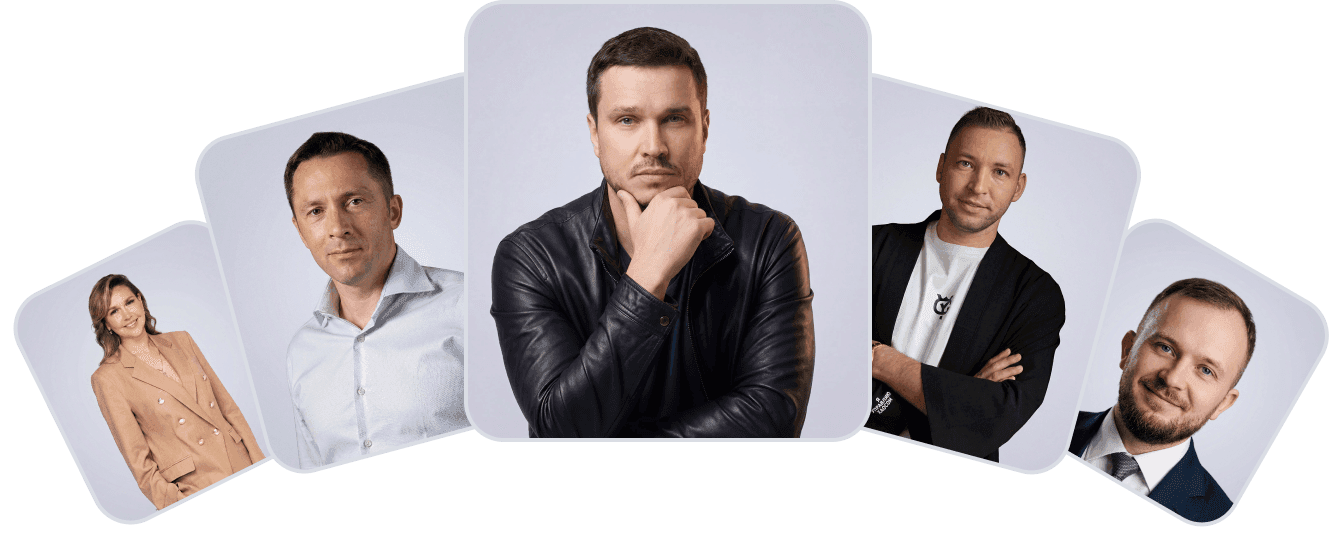
In this regard, what is useful is not "another startup course," but a conversation with someone who has already walked a similar path. United Mentors brings together active entrepreneurs and practitioners: dozens of experienced founders share their experience, analyze the hypotheses of others, help identify weaknesses in products, sales, and packaging, and thereby strengthen themselves by transferring experience to others.
For Solo-SaaS, this is especially important. One conversation with an entrepreneur who has already sold a B2B service can save months of developing the wrong product. Not because the mentor will "give the right answer," but because they will ask questions that a founder working alone often ignores: who exactly is the buyer, where is their budget, which pain is regular, which sales channel is realistic, and what can be tested before writing code.
AI accelerates building. An experienced entrepreneur helps you not to confuse building with doing business.
What has changed in the role of the founder
Previously, the main question was: "Can you build this?"
Now the question is different: "Can you understand exactly what is worth building?"
You no longer need to spend years learning to code from scratch. But you need to be able to choose a niche, formulate a task, prompt Claude or another AI tool correctly, verify logic, fix errors, assemble a landing page, package the product, and bring a minimum version to a state that can be shown to people.
But that is only half the battle.
The other half is knowing how to talk to the market. Not just "conducting surveys" for the sake of it, but extracting reality from people: how they currently solve the problem, how much it costs, who makes the decision, why previous solutions didn't work, and what happens if the problem isn't solved.
First Round Review, in its analysis of Superhuman's approach to finding product-market fit, reveals an important insight: product-market fit cannot just be "felt"; it can be measured systematically through user reactions, such as by asking how disappointed they would be if the product disappeared (First Round Review). This is a useful framework for Solo-SaaS: do not ask "do you like the product," but test whether it has become truly necessary.
Because "cool" is not a metric.
A metric is a person who returns, uses, recommends, pays, and gets upset if the product disappears.
What to do before writing code
Before building a new Solo-SaaS, you should go through a market checklist, not a technical one.
First: formulate the problem in one sentence. Not "an AI service for productivity," but "we help small agency owners not lose incoming inquiries from messengers."
Second: find the current replacement. If people aren't solving the problem at all right now, it might not be important enough. A good sign is that they are already paying with money or time: using spreadsheets, hiring an assistant, buying an inconvenient service, or doing it manually.
Third: talk to potential clients before development. Don't ask: "Would you buy this?" People almost always lie politely. It is better to ask: "How did you solve this last time?", "How much time did it take?", "What was the most irritating part?", "What tools have you tried?", "Who pays for the solution?"
Fourth: check the channel. If you don't know how you will get the first 20 paying users, it is too early to build the product. Not "I'll launch on social media," but specifically: which communities, which search queries, which partners, which cold emails, which integrations, which platforms.
Fifth: make a minimum version that is not minimal in code, but minimal in proof. Sometimes this isn't an app, but a landing page and a manual service behind the scenes. Sometimes—a spreadsheet, a form, and a Telegram bot. Sometimes—a consultation after which it becomes clear whether the process is worth automating.
Conclusion
Most Solo-SaaS projects will die not because the founder failed to write code.
On the contrary: the code will be written. The interface will be assembled. Payments will be integrated. The AI will respond. The landing page will feature beautiful phrases about automation, time savings, and increased efficiency.
But a business will not emerge if there was no market to begin with.
AI has made product creation cheaper. Therefore, the main deficit now is not development, but entrepreneurial thinking: selecting a narrow pain point, finding a solvent client, understanding the sales channel, packaging the value, and enduring the unpleasant stage of talking to the market.
Solo-SaaS doesn't die in the code editor.
It dies the moment the founder spends months improving a product that no one wanted badly enough.