Why Users Say "Cool" But Don't Pay
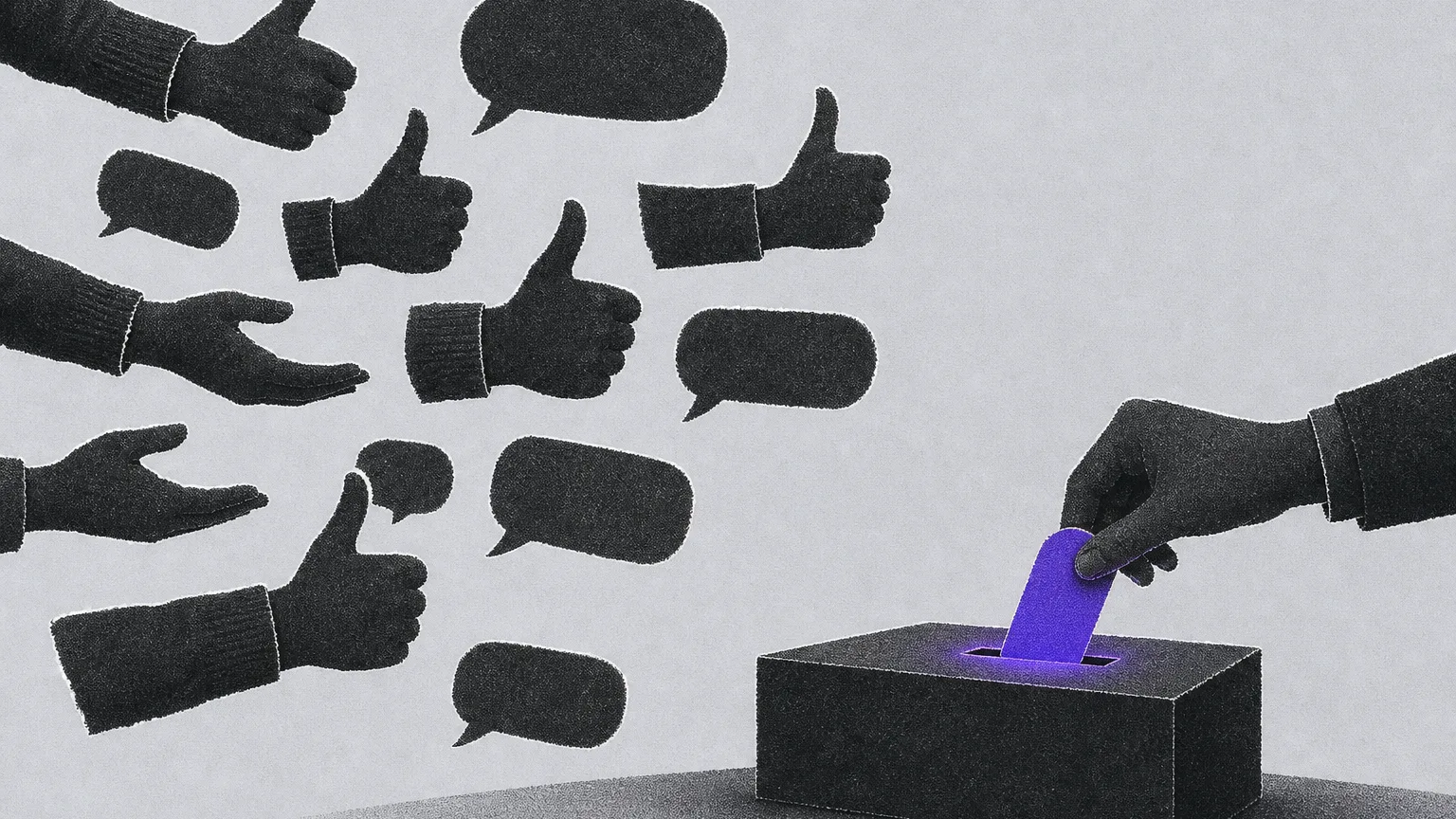
One of the most frustrating moments for a founder looks like this: you show your product to potential users, and almost everyone reacts positively.
"Cool idea." "I definitely need something like this." "Let me know when you launch." "Yes, I would use this." "Looks very useful."
The founder leaves these conversations feeling inspired, builds the product, spends weeks or months on development, launches—and almost no one pays.
This is not a rarity. It is the standard outcome of poor demand validation.
The problem is that what users say and what users do are two different data sources. And for a business, the latter is almost always more important than the former.
People are poor predictors of their future behavior
When someone says "I would use this," they are often not lying. In the moment, the product really might seem useful to them. But that does not mean that a week later they will pull out their credit card, go through registration, migrate their data, set up their team, and start paying.
In economics, there is a distinction between stated preferences and revealed preferences. Stated preferences are what a person says in a survey or interview. Revealed preferences are what is seen through their actual actions: bought, subscribed, spent time, switched to another tool, or abandoned an old process.
This distinction has long been used in consumer behavior research. For example, studies on willingness to pay explicitly note that stated willingness is useful but limited: people may overvalue a future purchase, especially if the question is hypothetical and not tied to real money (Systematic review on willingness to pay methods, 2022).
For an entrepreneur, the conclusion is simple: the phrase "I would buy this" is worth almost nothing until the person has taken an action that resembles a purchase in some way.
Submitted an application. Signed up for a demo. Asked for an invoice. Signed a letter of intent. Paid an advance. Spent an hour migrating data. Invited a colleague to a call. Started using the product regularly.
Until then, you don't have demand. You have polite interest.
Why people say "cool"
There are several reasons why a user gives a positive signal, even if they have no intention of paying.
The first is social politeness. It is easier for a person to say "interesting" than to explain that the idea is weak, unclear, or unimportant. Especially if the product is being presented by the founder, who clearly put effort into it.
The second is the lack of a price at the time of the conversation. As long as the product is free, imaginary, or "coming sometime later," the decision costs almost nothing. But as soon as a price appears, the psychology of choice changes. The user compares the product not to an ideal utility, but to alternatives: money, time, their habitual process, implementation risks, and other tasks.
The third is the gap between interest and pain. A person might be interested, but not in pain. They may acknowledge that a problem exists but not consider it important enough to solve right now.
This is the key point.
Not every problem is "buyer pain." Buyer pain is not "it would be nice to improve this." It is "this irritates me regularly, costs me money, slows down my work, creates risk, or prevents me from earning."
The main mistake in interviews: asking for an opinion on a solution
Most founders ruin demand validation with one sentence: "Would you use a product like this?"
That is a bad question.
It asks a person to predict future behavior in a situation that does not yet exist. At the same time, the person wants to be a pleasant conversationalist and often answers exactly how they think you expect them to.
In his book The Mom Test, Rob Fitzpatrick formulated a rule of thumb: you shouldn't ask people if they like your idea; you should ask how they are already living with the problem. Good interviews don't ask "would you buy this?" but rather "how did you solve this last time?," "what have you already tried?," "how much time did you lose?," "who else was involved?," and "what was the most unpleasant part?" (summary of The Mom Test principles).
Why does this work? Because past behavior is more reliable than future promises.
If a person says the problem is important but has never searched for a solution, tried to replace their process, paid for an alternative, or set aside time, that is a weak signal.
If they are already using a "hacky" spreadsheet, paying an assistant, using an inconvenient service, writing out instructions by hand, or losing money every week due to an error—that is stronger.
Not because they said "cool," but because their behavior already shows that the problem is worth resources.
"Cool" is not product-market fit
Many people confuse a positive reaction with product-market fit.
Product-market fit is not when people like the idea. It is when the product becomes important enough that people use it, return to it, recommend it, and wouldn't want to lose it.
Superhuman is known for turning the search for product-market fit into a measurable system. Instead of the question "do you like the product?," they asked users: "How would you feel if you could no longer use the product?" The target signal is the share of users who answered "very disappointed." According to Sean Ellis's methodology, if more than 40% answer this way, the product shows signs of strong market fit (First Round Review on the Superhuman approach).
This is a fundamentally different question.
"Do you like it?" tests for fondness. "Will you be disappointed if it disappears?" tests for dependence on value.
For an early-stage product, this is especially important. People might praise the interface, the idea, the automation, or the AI features. But if the product disappearing changes nothing in their work, they won't pay.
Why free users often deceive
Free usage also doesn't always prove demand.
If a person registers, that is better than praise. But registration is not a purchase. A free user might stop by out of curiosity, poke around the interface, and leave. This is especially true if the product is tied to a trendy topic: AI, productivity, finance, or automation.
That is why it is important to look not at the act of registration itself, but at the behavior after it.
Did the user return? Did they perform a key action? Did they connect their data? Did they invite colleagues? Did they create a project? Did they configure a process? Did they reach a result? Did they come back a week later? Did they ask about payment?
If not, this might be curiosity, not demand.
For SaaS, "vanity metrics" are especially dangerous—beautiful but weak indicators like registrations, landing page views, likes, comments, and waitlist numbers. These might mean interest in the topic, but not readiness to pay.
Readiness to pay begins where the user encounters a price and continues moving forward anyway.
What counts as real validation
Good demand validation should move the user toward a real choice.
Weak signals:
- "Cool idea";
- A like on a post;
- "I would use this";
- Subscribing to news;
- Registration without follow-up action;
- A request to "let me know when it's ready."
Moderate signals:
- The user describes their current process in detail;
- Shows what they currently use;
- Admits to specific losses;
- Asks for a demo;
- Returns with a follow-up question;
- Brings in a colleague;
- Gives access to data for testing.
Strong signals:
- Advance payment;
- Signed letter of intent;
- Paid pilot program;
- Migration of data;
- Internal budget approval;
- Abandonment of an old tool;
- Regular use without reminders;
- Recommending it to another client;
- Asking "how do I connect?" instead of "how much does it cost?"
In a practical breakdown of demand validation for subscription products, RevenueCat highlights paid waitlists, pre-sales, and "fake door" tests as ways to distinguish interest from a real intent to purchase (RevenueCat, 2025). The principle remains the same: the closer the test is to a real action, the less room there is for self-deception.
Why the price should appear sooner
Many founders are afraid to talk about price at an early stage. It seems that first you need to generate interest, then refine the product, then carefully monetize it.
But price is part of the product.
Without a price, you are not testing a business, but sympathy. The same service might be "cool" for free, "maybe I'll try it" for a modest fee, and "no, it's not worth that much" at a premium monthly price.
Price reveals the true importance of the problem.
If a user says the task is critical but is not ready to pay even a symbolic sum, there are three possibilities:
- The problem is not actually that important;
- The solution does not inspire trust;
- You are talking to the wrong buyer.
All three conclusions are useful. But you won't get them until you raise the subject of money.
For B2B, this is especially important. The user and the buyer are often different people. An employee might say "it's very convenient," but a manager has to approve the budget. Therefore, you need to verify not only convenience but also economic sense: what the product cuts, accelerates, prevents, or increases.
How to ask questions so you don't collect false praise
Bad questions:
- "Do you like the idea?"
- "Would you use this?"
- "How much would you pay?"
- "Is this useful?"
- "Does the market need a product like this?"
Better questions:
- "When was the last time you encountered this problem?"
- "How did you solve it then?"
- "What was the most unpleasant part?"
- "How much time or money did it cost?"
- "Who within the company suffers from this problem?"
- "Who makes the decision to purchase a solution?"
- "What tools have you already tried?"
- "Why didn't they work for you?"
- "What will happen if the problem isn't solved in the next six months?"
- "Can we launch a paid pilot with a small group?"
A good interview should talk less about your product and more about the client's life without it.
If after the conversation you only know that the person "liked the idea," the conversation was weak. If you understand how they are currently solving the problem, how much it costs, and why their current method is bad, the conversation was useful.
What to do if everyone praises you but no one pays
First: stop treating interface improvements as the primary response. Often, the problem is not in the design, but in the lack of sufficiently strong pain.
Second: narrow your segment. It is possible your product is too general. "For entrepreneurs" is almost always weaker than "for 10–30 person agencies that lose incoming leads from Telegram and WhatsApp."
Third: find the current paid alternative. If people are already paying for a bad solution, you have a chance to replace it with a better one. If they are doing nothing, you need to understand why: they don't know, they can't, they don't consider it important, or the problem isn't a "buyer problem" at all.
Fourth: ask for action, not an opinion. Not "is it interesting?," but "are you available for a call on Tuesday?," "can we connect your data?," "are you ready to pay for a pilot?," or "who else needs to be involved in this decision?"
Fifth: measure retention. If people try the product and don't come back, that is more honest than any compliment.
Conclusion
Users say "cool" for various reasons: out of politeness, interest, curiosity, a desire to be supportive, or a weak sense of utility.
But business is not built on compliments.
Business starts where a person changes their behavior: pays, returns, migrates data, invites colleagues, abandons an old method, recommends the product, and feels disappointed if it disappears.
Therefore, early validation should verify not an opinion about the product, but the strength of the problem and the readiness to act.
"Cool" is the start of a conversation. "Here's my card" is a market.