Why Vacations Don’t Save You From Overload
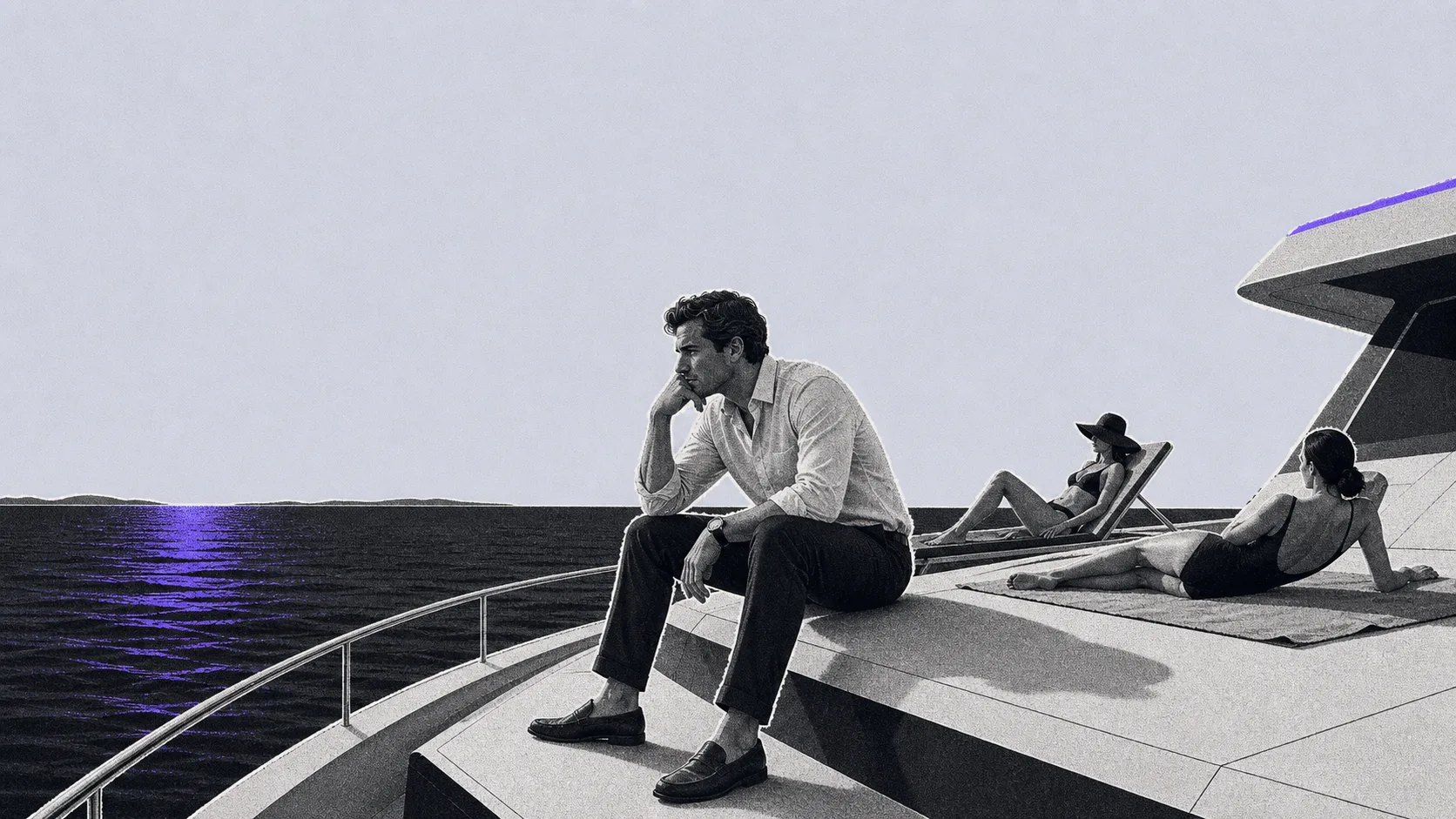
Entrepreneurs have a dangerous habit: treating their bodies like servers that can be shut down once a year for maintenance. Eleven months of working to the limit, followed by two or three weeks of beach time, sleep, and putting the phone on airplane mode—and then back into the fray.
Intuitively, this seems reasonable. If fatigue has been accumulating for a long time, then a long break is needed. If the year was tough, the vacation must be “real”: farther away, longer, and without a calendar or alarm clock.
However, research on recovery from work reveals a grimmer picture. Rest doesn’t work like a bank account where you can accumulate fatigue for months and then pay it off with one large payment. It is more like sleep. You cannot properly “make up” for a month of sleep deprivation in one long Saturday. You might feel a little better, but the system itself has already been overloaded.
A similar thing happens with vacations.
In a study by Jessica de Bloom, Sabine Geurts, and Michiel Kompier, participants rested for an average of 23 days. Their well-being, mood, fatigue, tension, and energy levels were measured before the vacation, several times during it, and after returning to work. The result is unpleasant for anyone hoping to “reset for a month”: health and well-being increased quickly during the vacation, peaked around the eighth day, and rapidly reverted to baseline levels within the first week back at work (de Bloom et al., 2013).
A long vacation does help. It gives the body and mind space that is usually lacking. But its effect is poorly sustained if the individual returns to the same environment: the same pace, the same overloads, the same availability to everyone, and the same inability to recover between work blocks.
The main question, therefore, is not how many days you can disappear from operations in the summer. The main question is what happens to you during the other weeks of the year.
Why long vacations burn out quickly
The key theory here is the Effort-Recovery Model, developed by Theo Meijman and Gerd Mulder. Its logic is simple: work requires effort, effort causes physiological and psychological stress reactions, and recovery begins when the demands cease and the body's systems return to their baseline level.
In this model, the word “cease” is important. Not “become slightly less urgent,” not “move to Telegram,” not “are pushed to the evening.” They must cease.
The problem begins when recovery remains incomplete. A person finishes the workday but continues to think about tasks. They don’t open the laptop, but they answer messages. They go to bed, but mentally argue with a client. They wake up and immediately check if anything happened in the chat. Formally, they are no longer working. Biologically, they are still working.
In the article by de Bloom and colleagues, this logic is described directly: with regular stressful demands and incomplete recovery between work periods, health and well-being suffer (de Bloom et al., 2013). Therefore, what matters is not just one big vacation a year, but the very ability to regularly exit the load state.
For an entrepreneur, this is an especially painful point. An employee often has at least an external boundary: a workday, a supervisor, a vacation schedule, and a formal end-of-shift time. For a founder, the boundaries are blurred. Even at home, they remain the person who “holds everything in their head”: money, people, sales, the product, legal risks, unfinished conversations, and future decisions.
That is precisely why an entrepreneur’s vacation often fails to provide recovery. The body has left work, but the management system continues to spin inside.
Vacations help, but do not solve the environmental problem
In 2009, de Bloom and colleagues published a meta-analysis of research on vacations and well-being. The conclusion was restrained: vacations have a positive effect on health and well-being, but this effect is usually small and fades quickly after returning to work (de Bloom et al., 2009).
Later, research on short vacations showed similar mechanics. For 80 workers, well-being improved after just 4–5 days of rest, but after returning, the effect also declined rapidly. Those who truly relaxed, psychologically detached from work, enjoyed their activities, and faced fewer unpleasant events during the vacation recovered more strongly (de Bloom et al., 2012).

This is an important clarification: it is not the geography itself that restores you. Not the “sea,” the “hotel,” or “flying far away.” What restores you is a state where work stops making demands on your psyche.
If an entrepreneur is lying by the pool but checking cash flow gaps, arguing in a chat with a contractor, and waiting for an answer from a key client, this is not a proper rest. This is work in a prettier place. The picture has changed, but the load regime has not.
Hence the disappointment after returning. The person seemed to be on vacation, but internally they never left the role of owner. They changed time zones, but did not change the state of their nervous system.
The 2025 Meta-Analysis: Vacations are useful after all
In 2025, a major meta-analysis was released, I Need a Vacation: A Meta-Analysis of Vacation and Employee Well-Being: the authors reviewed 32 studies and 256 effects. Their conclusion proved more optimistic than in earlier works: a vacation can provide more sustainable positive effects, especially if there is psychological detachment from work, relaxation, and restorative activities during the rest.
But this conclusion does not save the idea of “one big vacation instead of a normal rhythm.” Rather, it makes it more precise. A vacation is useful, but its power depends on the quality of recovery. If the rest turns into a change of scenery with a laptop, the effect is weaker. If the person truly disconnects, sleeps, exercises, gains control over their time, and stops being available to everyone, the effect is stronger.
For an entrepreneur, this means a simple thing: a vacation should not be the only tool for recovery. It should be part of a system. It should be as regular and mandatory as financial accounting, sales planning, or management meetings.
Otherwise, a vacation turns into repairs after a crash. And a good system is not built on emergency repairs.
Why entrepreneurs struggle to rest
Entrepreneurs have at least three reasons for being chronically under-recovered.
First is constant cognitive incompleteness. In business, there is almost no moment when everything is finished. Even if tasks are completed, risks remain: money, people, clients, competitors, taxes, the product, and reputation. The brain continues to keep open loops because each one seems potentially important.
Second is the high cost of absence. It feels to the entrepreneur that if they step away, something will inevitably break. Sometimes this is true. But if a business truly cannot withstand a few days without the owner, this is not an argument against vacation. It is a diagnostic sign of a weak management system.
Third is the culture of heroism. Many founders pride themselves on working without days off, answering at night, and being “always on call.” At an early stage, this may be inevitable. But if heroism becomes a constant operational model, it turns into a debt that the body will inevitably collect.
The main mistake is to perceive rest as a reward for work completed. In reality, rest is a requirement for the ability to continue working. Not a bonus. Not a luxury. Not a weakness. It is productivity infrastructure.
An entrepreneur who does not recover doesn't just get tired. They begin to see cause-and-effect relationships worse, make decisions more slowly, react more sharply to people, and confuse the urgent with the important more often. This is no longer a personal problem. It is a management risk.
Practical steps
First takeaway: You need to plan not just your vacation, but recovery within the week. If work blocks follow one another without pauses, the system overheats. Short breaks should not be “if there’s time.” They should be part of your calendar. You don't have to rest for a long time. It is important to regularly turn off the workload.
Second takeaway: You need a daily exit from the owner role. At least a short period where you don’t answer, don’t check, don’t plan, and don’t dwell on decisions. For many, this is harder than a vacation because it requires a boundary, not a plane ticket. A boundary is not a mood. It is a pre-established rule: when you are unavailable, to whom you are unavailable, and what constitutes a true exception.
Third takeaway: Consider taking recovery breaks before exhaustion compounds. Employment rules vary by country and company, but entrepreneurs often give themselves even less room to recover: “I’ll push through the year, then I’ll rest.”
Fourth takeaway: The quality of the rest is more important than the imagery. Studies consistently return to the same factors: psychological detachment, relaxation, pleasure, control over time, and sleep. If a vacation is filled with logistics, conflicts, urgent calls, and the attempt to “see everything,” it might be eventful, expensive, and beautiful. But that does not mean it will be restorative.
Fifth takeaway: Recovery must be protected as a management resource. If any pause is easily canceled due to a client, a chat, or internal anxiety, then there is no real recovery in the system. There are only gaps between tasks.
Conclusion
A big vacation is not meaningless. It is necessary. It can drastically improve your state, restore energy, and remind you that life is broader than the operational agenda. But it cannot compensate for a system in which a person has not recovered for months.
For an entrepreneur, the main question is not: “Where will I go on vacation this summer?” A much more important one is: “Where in my week is recovery built in, without which I start making decisions with a tired brain?”
A business does not need a founder who disappears to an island once a year because they can no longer function. A business needs a founder whose load and recovery are integrated into a working rhythm.
Vacation is not compensation for a year of wear and tear. It is part of system maintenance. And the sooner an entrepreneur starts treating themselves as a system rather than an infinite resource, the longer they remain useful to their own business.